Learn how startups can screen candidates, structure interview batches, improve candidate experience, and create clear hiring timelines.
Small companies often approach hiring with good intentions but poor structure. They screen hundreds of applicants, spend weeks discussing résumés, adding comments, updating applicant lists and then struggle to start interviews because nobody has committed to a plan.
The result is a slow process, frustrated candidates, and delayed hiring decisions.
A better approach is to treat hiring as a project with clear ownership, timelines, and decision points.
Start With Four Decisions
Before scheduling a single interview, the hiring team should be able to answer four questions:
- Who is being interviewed?
- How many candidates are being interviewed?
- What is the hiring timeline?
- Who has authority to make the final decision?
If you can answer these questions, you are ready to being hiring and start the interview process.
Many hiring delays are not caused by a lack of candidates. They are caused by a lack of commitment.
Build Candidate Batches
One of the biggest mistakes small companies make is interviewing candidates one at a time as they appear.
Instead, create candidate batches.
For example:
- 300 applications received
- 30 candidates shortlisted
- 12 candidates selected for deeper review
- 5 candidates chosen for Interview Batch 1
- 7 candidates placed on a reserve list
The goal is not to interview everyone. The goal is to compare a manageable group against the same hiring criteria within the same timeframe.
A batch creates structure. Everyone knows who is being evaluated, when interviews will occur, and when decisions will be made.
Why Rolling Interviews Often Create Problems
Many companies assume that interviewing candidates on a rolling basis is more efficient. In reality, it often creates confusion.
Scenario A: The Endless Search
A company interviews two candidates immediately.
Then leadership spends three more weeks debating the remaining applicants.
The interview process stalls, the candidates wait, and the company incurs additional recruiting costs without making progress.
Starting interviews early did not save time because the organization was not ready to make decisions.
Scenario B: The Moving Goalposts
A company interviews two candidates.
Later, stronger candidates enter the pipeline and the hiring team changes its expectations for the role.
Now the first candidates were evaluated under one set of standards while later candidates are evaluated under another.
The process becomes inconsistent and comparisons become difficult.
Scenario C: The Candidate Waiting Game
Candidate A interviews in Week 1.
Candidate H interviews in Week 8.
The company waits until all interviews are complete before making a decision.
Candidate A experiences a two-month delay with little clarity about their status. Meanwhile, strong candidates may accept offers elsewhere.
This is one of the fastest ways to damage candidate experience.
Candidate Experience Matters
Candidates are evaluating your company just as much as you are evaluating them.
A candidate should know:
- What interview stages exist
- How many interviews to expect
- When they can expect feedback
- When a final decision is likely
You do not need to promise an exact date.
But you do need to provide a realistic timeline.
"We are interviewing five (or all) candidates over the next two weeks and expect to make a decision by the end of the month."
That level of clarity builds trust and professionalism.
Commit to a Decision Framework
Many hiring processes become stuck because nobody wants to commit.
The hiring team keeps reviewing profiles, discussing alternatives, and searching for the perfect candidate.
Perfection is rarely the goal.
The goal is to determine whether someone meets the hiring bar.
Before interviews begin, decide:
- How many candidates will be interviewed in the current batch
- What success looks like
- Who can approve an offer
- What happens if no candidate meets the bar
"We will interview five candidates. If one meets our requirements, we will proceed with an offer. If not, we will revisit the reserve list."
👍 That is a complete decision framework.
Hiring Is a Project, Not a Discussion
Small companies often believe that more discussion leads to better hiring decisions.
In reality, better hiring usually comes from better process.
📋 Create a shortlist. Build interview batches. 📅 Establish timelines. Assign decision-makers. 💬 Communicate clearly with candidates.
The companies that hire effectively are not the ones that review the most CVs. They are the ones that know when to stop reviewing and start deciding
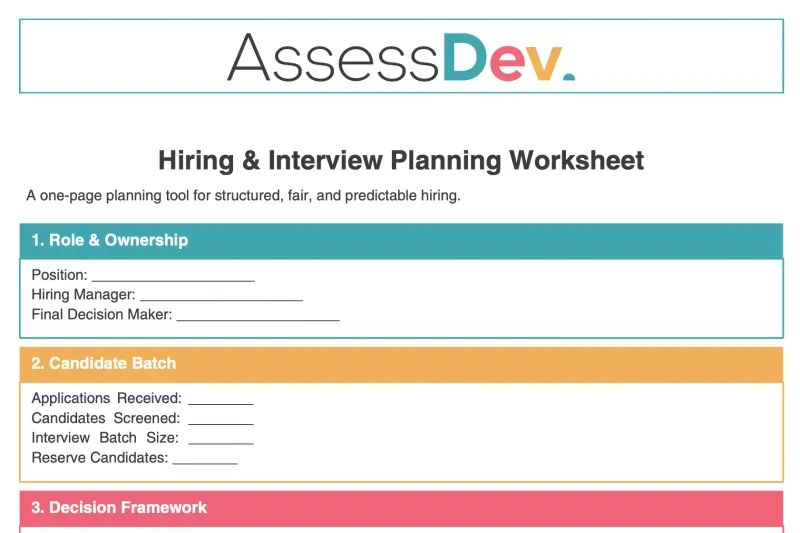
⬇️ ⬇️ ⬇️ Download the 1-page hiring and interview prep worksheet here and use it to create your clear hiring timelines.
Click on the preview image below to download the 1-pager.
Want help turning the plan into a hiring timeline?
Work backward from your start date with our hiring start date calculator, see our sample interview structure, or book an interviewer to have us run the whole process for you.