But your candidates still feel the camera.
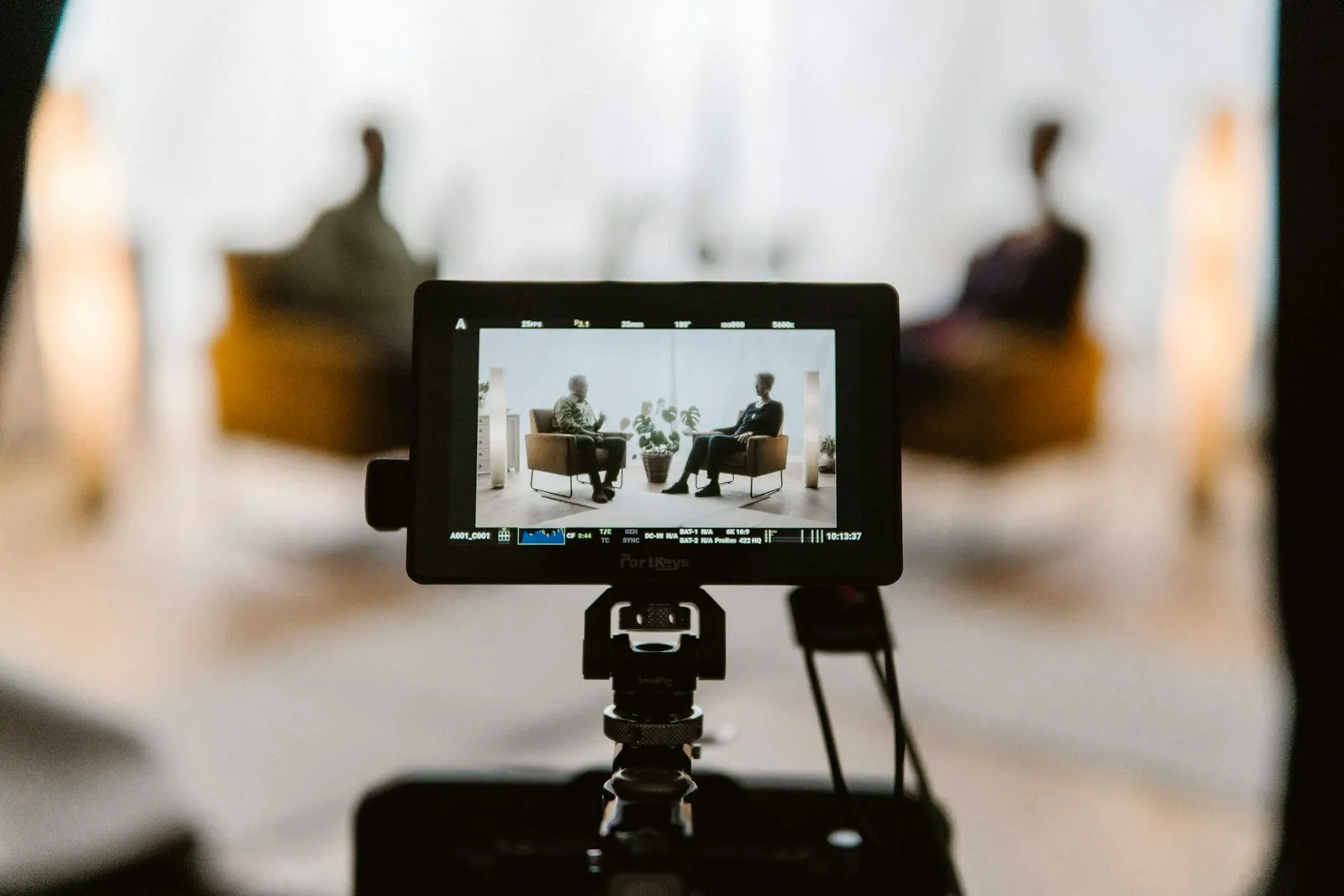
We record interviews to be fair. Then we never press play. At least, nobody can prove that we do.
More Interviews Are Recorded and Summarised by AI Than Ever
Last week HR Dive covered a new report from Challenger, Gray & Christmas on interview recordings. The short version: more and more interviews are now recorded, transcribed and summarised by AI. Zoom, Teams and Google Meet all do it. Most recruiting tools do it too.
That creates a paper trail nobody planned for. A candidate's slip-up is stored forever. So is an interviewer's bad question.
But the line that stuck with me was this one from John Challenger: "A hiring manager may read an AI-generated summary without watching the interview."
So we record everything. Then we read a summary of it. And that summary becomes the first opinion about the candidate, even when the tool is "just a notetaker."
Does Anyone Actually Watch the Recordings?
I went looking for the numbers. How often are recordings watched? How many times? Does anyone rewatch before deciding?
Here's what I found: nobody knows. I couldn't find a single independent study or neutral survey that measures it. Not in the hiring research journals, not in the big HR reports.
What exists comes from the companies selling the tools. One AI interview vendor admits recruiters don't watch every recording, especially in high-volume hiring. They give no numbers. Another says candidates whose recordings get reviewed are 2.4x more likely to be hired. But there's no sample and no method, and it's probably the other way round. Teams review the people they already like.
The tools themselves give a hint. They push highlight clips, short summaries and 2x playback. You don't build those features for people who watch full interviews.
Does Going Back to the Evidence Actually Help Hiring Decisions?
This part has some real research behind it.
In a 2002 study in the Journal of Applied Psychology, Middendorf and Macan had people watch recorded interviews and take notes. Taking notes helped them remember more. But it did not make their judgments more accurate.
What did help was being able to review the notes before deciding. That improved judgment accuracy. The value isn't in capturing the interview. It's in going back to the evidence before you decide.
A recording is the most complete record you can have. But if nobody opens it, it's just storage.
Outside hiring, research also shows people can score from video very consistently. In one medical exam study, examiners who scored videos together and compared notes went from weak agreement to strong agreement. That only works because they actually watched.
What Does the Camera Do to Candidates?
John Challenger put it well in the same HR Dive piece: "Recording changes how candidates behave and how hiring teams interpret interviews." So what does the research say about the candidate side? Here the answer is: it depends.
The camera can add stress. The standard lab method for making people stressed on purpose is the Trier Social Stress Test. Part of the setup is telling people they're being filmed for later analysis. A 2026 review notes that researchers often see the camera as the part people find most uncomfortable.
One-way recorded interviews feel worse. In a 2017 study by Langer, König and Krause, candidates found recorded one-way interviews creepier and less personal than live video calls. They also had more privacy worries.
Live video on its own isn't the problem. A 2021 study by Melchers and colleagues compared face-to-face, phone and video interviews. They found no difference in anxiety or physical stress.
Making it feel human helps. In a 2024 study by Rizi and Roulin, one-way interviews with video questions from a real person felt more personal than text questions. That was linked to lower anxiety and better answers.
What Candidates Say About Recorded Interviews
The research matches what candidates tell reporters.
HR Brew spoke to two job seekers who did one-way recorded interviews. An industrial engineer said the time limits made it hard to show her personality. She was too busy making sure she answered exactly what was asked. An operations executive said it felt unnatural to talk about a career move to a machine, with no one to ask a follow-up question.
The engineer later ended up grading these videos herself. She said she still feels uncomfortable watching them, knowing how the people on screen feel.
On Reddit and in job-seeker groups, the words are harsher. People call one-way videos dehumanising and disrespectful. Some say they replay their own answers again and again and never feel ready to send.
Live recorded interviews get a softer reaction. One job seeker wrote about being asked to consent to a recording tool. She researched who would see the recording and how long it would be kept, then withdrew from the process (recording was one reason, not the only one). On the other side, one recording vendor claims 98% of candidates agree to be recorded. They don't say how they measured it.
So candidates don't hate the camera by default. They hate not knowing why it's there, who watches, and what happens to the video.
What to Do Instead of Recording by Default
I'm not saying stop recording. I'm saying don't record by default and call it fairness. Here are 5 fixes.
- Decide why you're recording before you hit record. Ask your team one question: "What decision would a recording or transcript help you make that a structured scorecard and interviewer notes wouldn't?" If nobody has a clear answer, you probably don't need the recording.
- Make reviewing part of the process. The research says reviewing the evidence is what helps, not capturing it. So build the review in. Score against the scorecard straight after the interview, with notes or the clip open. Don't wait three days and rely on memory or an AI summary.
- Don't let the summary become the verdict. An AI summary is a starting point, not an assessment. If a summary drives a "no," someone should check the actual answer before the rejection goes out.
- Tell candidates the why, the who and the when. Say why you're recording, who will watch it, and when it will be deleted. Give them a real option to say no, with no penalty. Candidates react to the unknown more than to the camera.
- If you use one-way videos, make them feel human. Record the questions yourself on video instead of showing text. Keep time limits reasonable. And actually watch what people send you. If they took the time to record, someone should take the time to watch.
Your Interview Recording Checklist
- ☐ We know what decision the recording helps us make.
- ☐ Scorecards are filled in straight after each interview.
- ☐ Someone reviews the evidence before any rejection.
- ☐ AI summaries are checked against the real answer when it matters.
- ☐ Candidates know why we record, who watches and when it's deleted.
- ☐ Candidates can say no to recording without penalty.
- ☐ One-way videos use real people asking the questions.
- ☐ Every recorded answer we ask for gets watched.
A recording nobody watches isn't evidence, it's storage. Candidates feel the camera, so only use it when you'll actually press play.
Interviews That Don't Need a Replay to Be Fair
At AssessDev, our team always takes notes during every interview. Same questions, same scorecard, written down while it's happening, not from memory afterwards. If you want interviews that don't rely on someone rewatching a recording, Tech Assessments are structured technical interviews run by real engineers, with the same format and scorecard for every candidate. Or learn the same approach yourself inside How to Interview Engineers Without Being an Engineer.
Sources: HR Dive (Kathryn Moody), “AI summaries leave a paper trail recruiters might not be ready for” (18 Sep 2026). Middendorf & Macan (2002), Journal of Applied Psychology, 87(2), 293-303. Langer, König & Krause (2017), International Journal of Selection and Assessment, 25, 371-382. Melchers et al. (2021), Frontiers in Psychology. Rizi & Roulin (2024), International Journal of Selection and Assessment, 32, 54-68. Wesarg-Menzel & Engert (2026), Comprehensive Psychoneuroendocrinology. HR Brew (Sam Blum), “One-way video interviews are impersonal, candidates say, and raise privacy concerns” (25 Apr 2022).